
By Hazel Doolan
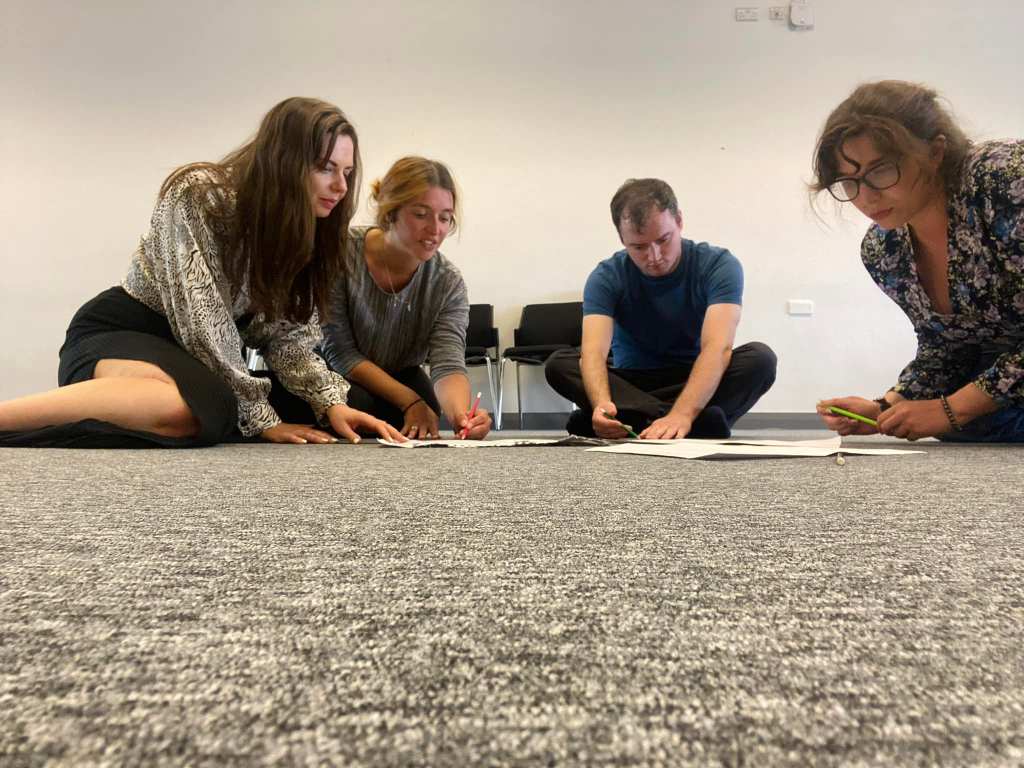
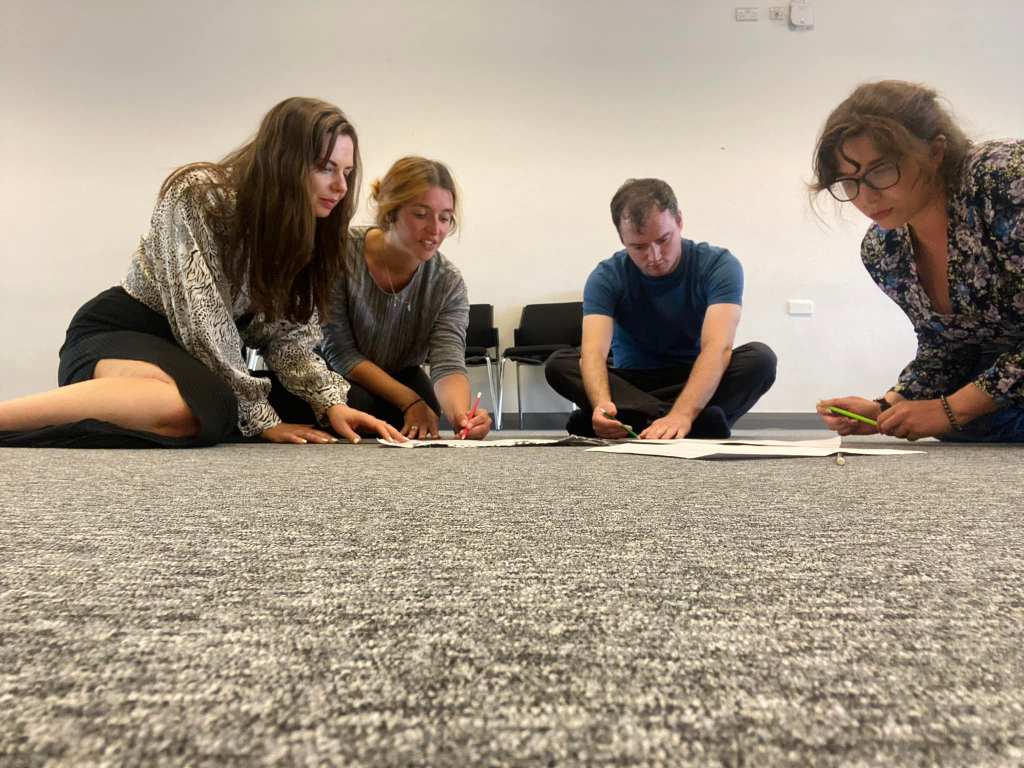
In my early career, I have heard of script development workshops, I didn’t grasp what they were back then. Was the script finished at this point? Was there even a script? What happened in the room? Who was there? Why have the workshops? Why sit around a room to discuss the script and or do exercises? Could that all happen in the rehearsal room anyway? Short answer to the latter is yes. In saying that, I have taken part in five workshops like these now and have two more coming up before the year is out. I have been an actor in four and a playwright in one, each of them I have found value in. Here’s why.
Creative Exploration
In the perspective of a playwright and actor, anything could happen in the development process. A playwright could have one idea going into the development space. An actor may do something on a whim and or accidental in the space which strokes a spark for the playwright. It could be a sigh, movement, use of voice or movenemnt that the playwright may not have thought of that is significant for the character being portrayed. Perhaps there is something that a director or facilitator of the workshop noticed with the language or a line that the playwright thought was a throw away or a reactive line.
Perspective
Linking to the previous point, the playwright may gain different perspectives from different artists in the room. There may be an idea the playwright is conveying which one artist may not see while another artist may see entirely. Meanwhile, another artist in the room may see something completely different. Now there can be a danger in trying to adapt to all points as the playwright could end up scrambled script, or it could be beneficial to see which ideas work and which don’t? As a whole, it is useful to have such things come up then. These would be potential unanswered questions or gaps an audience member may identify.
Further Development
The time spent on the script after the workshop is a time for the playwright to reflect, regroup and potentially rewrite. It of course could lead to the playwright to write a full script for performance and or publication.
Build a Portfolio
All artists in the space have an opportunity to build on their professional portfolio. It is an opportunity to collaborate with new people that they wouldn’t have worked with before. More likely than not, the facilitator and or organiser of the workshops will remember siad artists and bring them back for future workshops and or productions.
Interaction with other Artists
Along with the artistic interactions, it is an opportunity for other artists to engage with each other. They may find that they have common interests and hobbies. In a recent workshop, I met an artist who was a sound healer and the majority of artists in the room had interest in crystals, tarot, mindfulness and yoga which I thought was really cool. Plus, they were all women!
Thank you for reading, maybe I could write a follow up after my next two workshops and write a guide/how to/part two? Talk to ye soon!
Hazel x
 Echo Acting
Leave a comment